Peter David's Friendly Neighborhood Spider-Man Review
Why are we here again?
I was supposed to be reading Non-Stop Spider-Man on the road to Amazing Spider-Man #1000. I stumbled onto the other Friendly Neighborhood Spider-Man and decided to re-read it instead. The last time I read this run was 15 years ago, in 2011. I remembered there were some plot lines I found pretty cool back then, mainly Mysterio’s return from hell.
The run sits in a very specific era of Spider-Man, from The Other to Brand New Day. Spider-Man Unmasked, Civil War, Back in Black, One More Day. It is a uniquely weird time in Spider-Man’s history and we are never going back to it. We can’t. The bookends, The Other and Brand New Day, deserve their own separate discussions, and I’m not going to spend time on them here. Everyone knows about One More Day. I don’t have any sage wisdom to add there.
Peter David is a great writer. X-Factor Vol 3 is one of the greatest comic book runs of all time, not just one of the greatest X-Men runs. The amount of plot set-up AND character drama that he was able to inject in those issues, is just unparalleled. The book ran from late 2005 to September 2013, about an 8-year stretch in real time. We do not see runs that long anymore. Maybe a new era of comics is not supposed to be that way. I think we could still have runs like that, but tangent aside, the point is that PAD is one of the greats of all time. So let’s talk about his run.
What works: The era
These characters are old. They look old. You can see it. You can see the age on their faces, especially in the Scott Eaton issues. You can see the scars on them, both physical and mental, and you don’t get to see that anymore. They look like early-to-mid 30-somethings in this era. Today, they all look and feel evergreen, much younger than they should be. I understand why it’s done this way now, the movies don’t leave Marvel much choice. But it really stood out to me on this re-read.
I also understand why Marvel felt they had to put the genie back in the box. They always undo these things. Even before the movie era they would undo decisions, like with Heroes Reborn. With the movies, they really had no choice. Characters have to stay evergreen. The fact that Peter David also seeded Mephisto into the run is actually a decent setup for One More Day. It makes that story feel a little less random than it otherwise would. Still sucks though.
This is the Spider-Man and his supporting cast, in a way you will never see again in the main continuity.
What works: How Spider-Man Ruined My Life
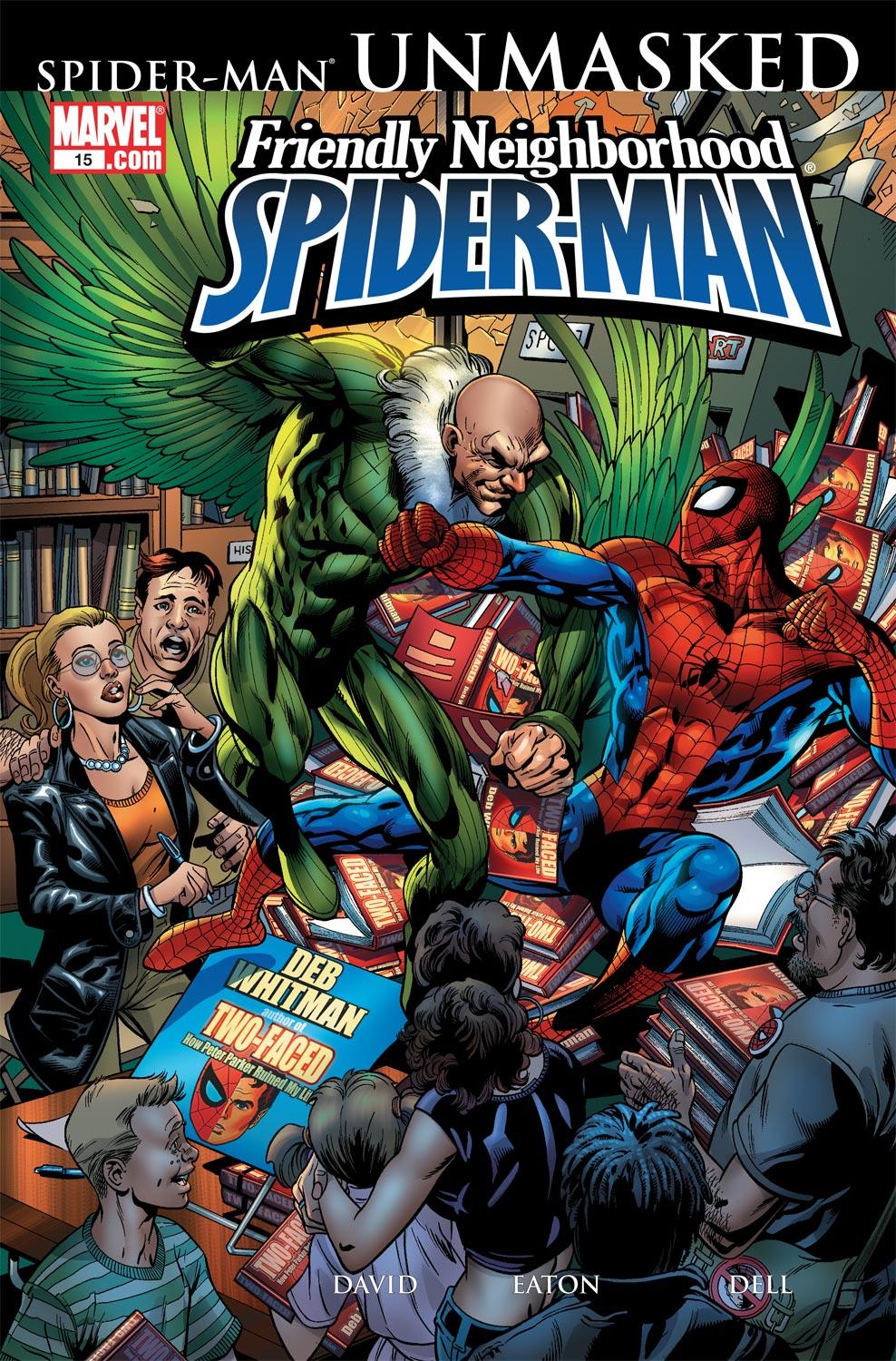
The best arc of this run is Taking Wing. Debra Whitman, Peter’s college girlfriend from the Stern run, writes a tell-all book, Two-Faced: How Peter Parker Ruined My Life, about Peter Parker after the Civil War unmasking. She just writes the book, because her mother is sick and the medical bills are way more than Deb can pay. When the Daily Bugle digs up Peter’s exes for dirt, she feels she has to take it.
It strikes a nerve because Peter really did take advantage of her. Peter really did make her believe she was crazy for thinking he and Spider-Man were the same person. Her grievance with him is correct. Of course Peter did it to protect people, and Deb herself is a good person, so she feels a lot of guilt about going public. That character dilemma, of the world forcing you to bend and corrupt yourself to survive, is really raw. It is something people genuinely relate to, especially anyone who has been seen financial pain.
The detail that hurts the most is that the story is no longer in Deb’s control. When she gets an advance copy of the book, things she didn’t write are in there, the publisher has pushed her to inflate the mental damage Peter “did” to her. Betty Brant is the one who talks her into telling the truth to the Daily Globe. It is the supporting cast saving each other, not Peter. He has his own fights.
Peter ends the arc trying to suffocate the Vulture. The Vulture has said he wants to die. He still fights back. Peter is teaching him a lesson, and it is great. No matter what he says, he wants to live. It’s an example of how merciless Peter is becoming in this period of his life, and I, for one, am all for it.
What works: the supporting cast
The supporting cast in this run is so well used. This is something I miss in modern Spider-Man so much, and it’s one of the reasons I have been enjoying Joe Kelly’s new run, which leans on the current supporting cast and does great background character work.
Flash Thompson is amazing here. He has brain damage so he is kind of back to acting like old Flash. But you can see the layers of maturity that we were not shown in the Silver Age issues. We see him treating Peter very poorly, like he used to, and then he admits to himself that Peter really is Spider-Man and starts treating him well. Outside of how he initially treats Peter, Flash is a really good guy and the run lets you see that.
Betty Brant is great. She’s a good friend to Peter, just supporting him, taking initiative in every arc she’s in, whether it’s on the page or shooting villains. That’s how you write a strong female character. She is a very underused part of Spider-Man’s cast these days. The last time she got real page time was Nick Spencer’s run, and I did not like that direction. They basically revived Ned Leeds and tried to undo a lot of old storytelling. Not my cup of tea.
The JJJ conversation in #23 (“Fighting Words”) is the most cathartic moment of the run. Peter and Jameson finally have the conversation that has been overdue for forty years of comics. It’s a dark mirror to the future conversation that these 2 have in Zdarsky’s run. Jonah realizes he has been paying Peter for years to take pictures of himself. The issue tricks you into thinking that Peter hurt him and in the end, it’s revealed that it’s just bad luck and Jonah hurting himself while trying to hurt Spider-Man, a fitting example and theme for his life. In the end, he tries to correct his mistakes, as much as an egoistical maniac like him can do, and that is where the run ends.
What works: the bills coming due
The overall theme of the run is that Spider-Man made a mistake when he revealed his identity, and all these things are coming to a head. These are conversations that were avoided by Peter, damage he caused to his friends and complexities of his relationships that he avoided as the two sides of his life never met for the people on the other side of the relationships. His students being in danger and him not being able to figure out what is the right thing to do: stay or leave? These are great stories, worth telling.
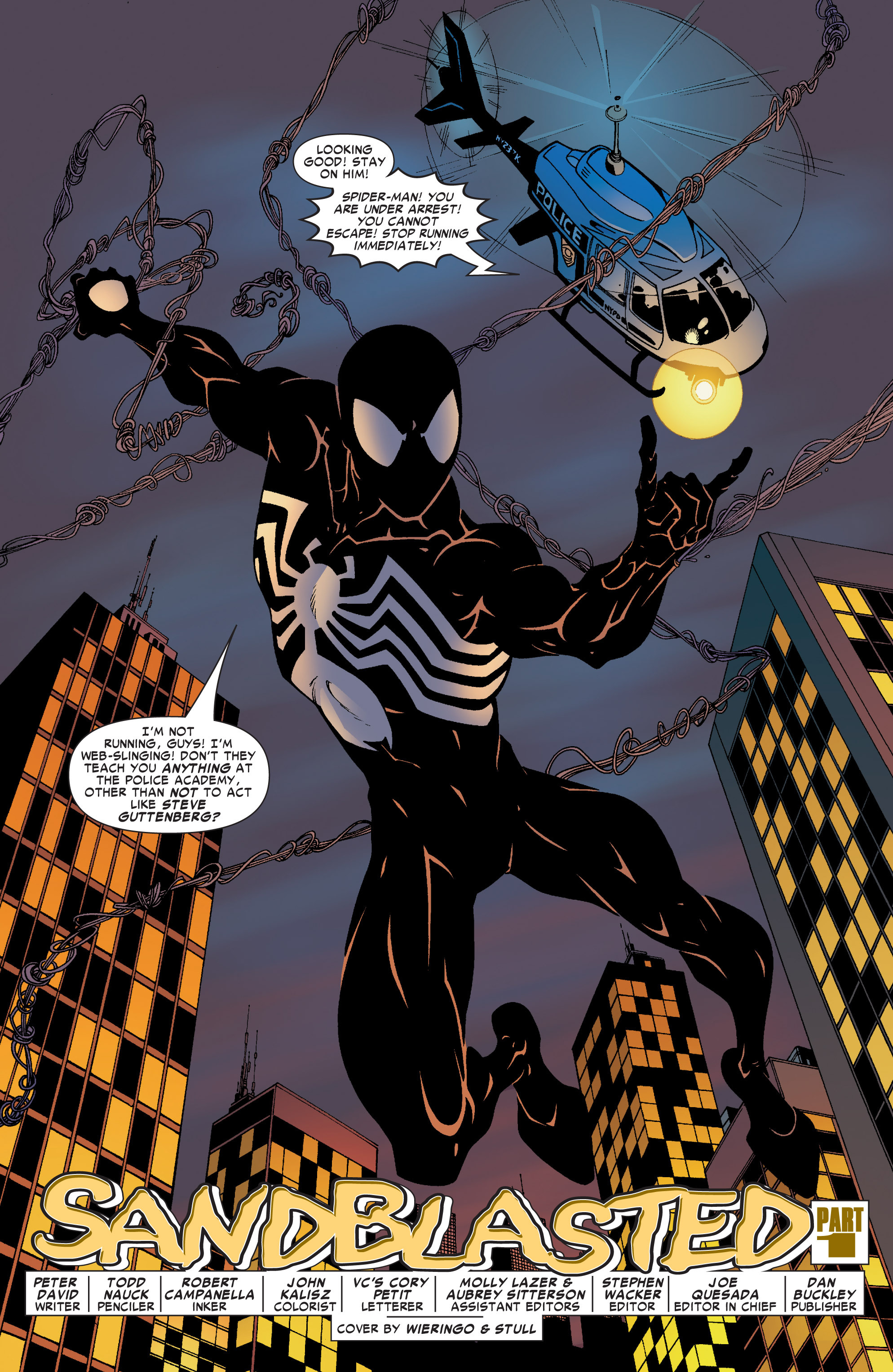
All the Back in Black parts work really well for the story. I for one am a sucker for these kinds of stories where Peter has no mercy. It shows that, unlike Superman, he can be pushed to a breaking point, and beyond that lies something truly dangerous.
The image inducer moment in #14 (“Masks”). Peter shows up disguised as Punisher and Wolverine using image inducers to scare people threatening his students, which is an inspired use of shared continuity technology and honestly, pulls a fast one on the reader for a few pages.
What doesn’t: Ero and the 2211 future characters
The Ero arc doesn’t work for me. Ero is the female spider-totem character, “Arrow” being a play on the ero genus of pirate spider. She is the embodiment of Peter’s spider powers, posed as his opposite, his nemesis and his “significant other.”, spinning out of The Other. I am a big fan of JMS’s Spider-Man and The Other. But there is a certain point where you just have to shake your head, and living spiders trying to mate with human beings is where I draw the line. It holds back the run a little for me.
The 2211 arc also doesn’t work for me. “Jumping the Tracks” in issues #8-10 is Peter David revisiting his own creation, Dr. Max Borne, the Spider-Man of the year 2211. The Hobgoblin of 2211 turns out to be Max’s daughter Robin Borne. She tries to bring chaos into the present by dropping in another Uncle Ben. Max gets killed by the Chameleon of 2211 posing as Uncle Ben. Robin gets erased by one of her own retcon bombs.
That is a lot of moving parts for what is essentially a five-page idea. The appearance of Uncle Ben from that timeline is such a small event from a thread we don’t get to follow to it’s logical and dramatic conclusions. At the very least, that Uncle Ben’s descent into the main universe should have been explored a bit more before they unceremoniously killed him off.
Peter not figuring out it was the Chameleon is frustrating. It’s the idiot ball. I was really impressed by how savvy and in-universe-aware these characters felt for most of the run. So Peter not guessing the Chameleon, of the present at least, was very surprising. Even the Spider-Man of 2211 dying feels unrealistic because most of his armor is metal, so how did a normal gunshot kill him? I don’t like these plots, which I feel could have easily been tightened.
The verdict
A bunch of missed potential, but still a great, fast read. It is just so steeped in continuity that this is for the Spider-Man fan who already knows his history. It is not something you can hand to someone new.
This run doesn’t feel like a complete story on its own. All these things (the unmasking, Aunt May being shot) are happening in Peter’s life and he’s dealing with them, and the main title, The Amazing Spider-Man is the one actually progressing the story. We just see the side stories that needed to be told, that complete the picture. If you read them all together in parallel, it would probably read much better. But I don’t know if you would want to do that with such a shitty ending waiting for us.
It is very hard to recommend JMS Spider-Man past issue 500 due to that reason.
So there you have it, folks. A solid 8 out of 10. The takeaway is that the characters look so old, and it really shows that these are old people who had a lot of shit happen in their life, not the constant young 20-somethings Marvel has wanted you to believe they are for the past 19 years. And it is just Peter David telling good stories.
Comments
No GitHub? Email me.